
The Journal / Objects & interiors
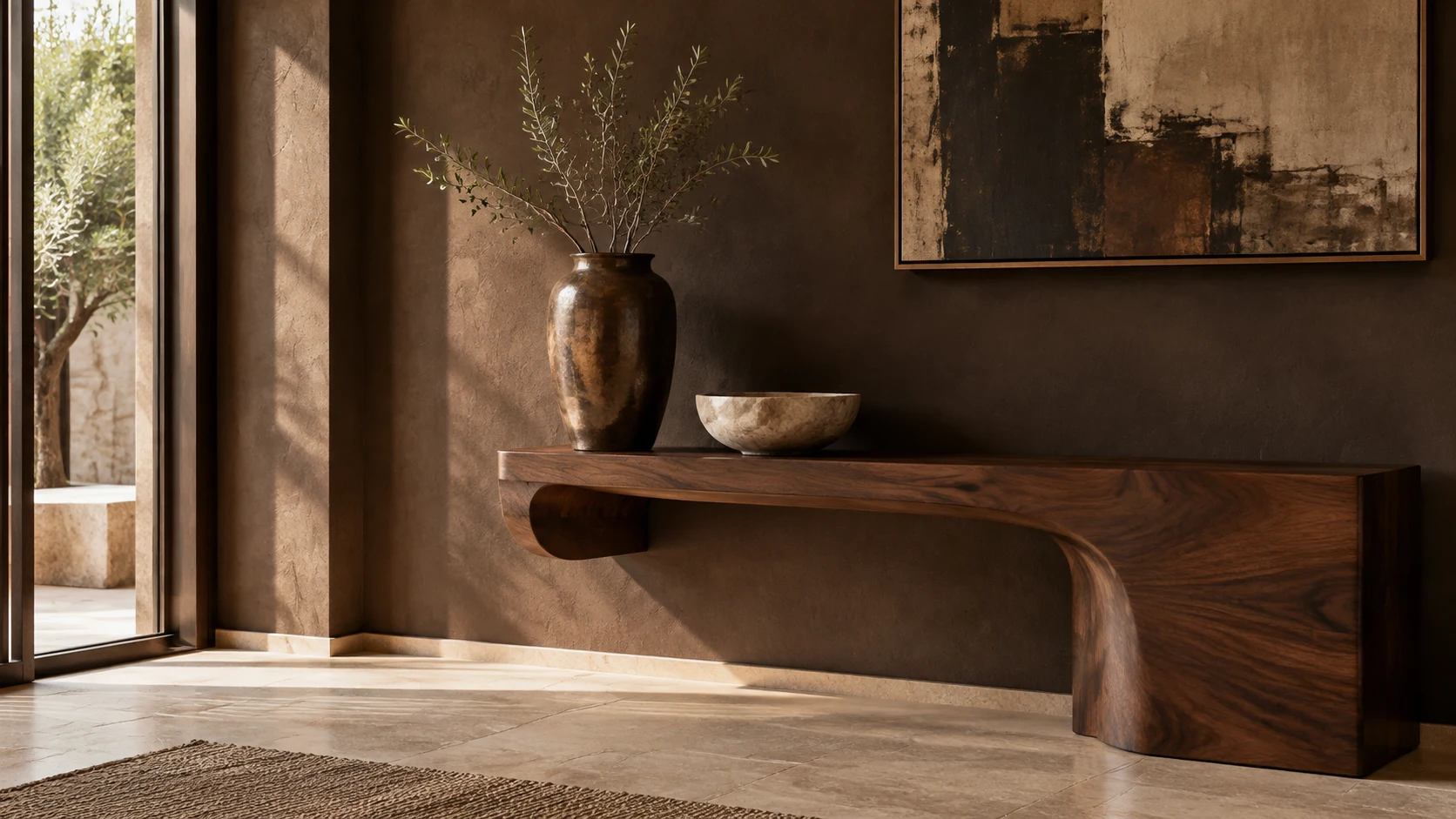
A statement piece should give a room a point of view. It should not make the room work harder to accommodate it.
The distinction becomes clear when you live with an object rather than see it on a screen. A sculptural console may be striking in a photograph and awkward beside the front door. A large vase may have the right colour but leave no useful surface on the table. An impressive cabinet may be too deep for the route between two rooms.
Choosing statement home decor is therefore less about finding the most unusual object and more about finding the right relationship: between the piece, the architecture, the objects around it and the way you use the house. For a private Indian home, that relationship should also account for practical matters such as delivery access, changing light, cleaning and the household’s daily routines.
Why craft-led interiors are receiving attention
Indian design coverage in 2026 has given considerable space to collectible design, material character and objects that sit between furniture and art. Outlook Luxe’s report on India Design ID 2026 described home decor, lighting, furniture and collectables together. The New Indian Express explored sculptural furniture earlier in the year.
This is useful context, not a reason to buy a piece. An object does not become right for your home because a similar category is in the design press. Nor does “collectible” guarantee future resale value. The stronger question is whether the piece has a clear identity and a lasting place in your own interior.
That might be a contemporary Indian ceramic, a well-documented antique, a custom console or a piece by a maker you have followed for years. There is no requirement for every purchase to tell the same story. There is a requirement for each one to deserve its space.
Start by deciding what the room is missing
Before looking at objects, look at the room without them. Does the entrance need a clear focal point? Does a long wall lack a sense of scale? Does the sitting area feel too soft and need a harder material? Or is the room already busy and asking for less?
Name one job for the proposed piece. “Anchor the entrance” is a job. “Add another luxury item” is not. The clearer the job, the easier it becomes to reject attractive objects that belong elsewhere.
Photograph the space from its normal approach. Include doors, switches, skirting, nearby furniture and the route people take through it. A tightly cropped image can hide the very constraints that will decide whether the piece works.
Proportion comes before finish
Measurements tell you whether an object will fit. Proportion tells you whether it will belong. Both matter.
For a console, record width, depth and height, then mark the footprint on the floor with a removable method suitable for that surface. Check the opening of drawers, the swing of doors and the position of nearby seating. A piece can fit a wall and still take too much from the room.
For a vessel or sculpture, consider its volume rather than its height alone. A narrow tall object and a wide low one occupy attention differently. Think about what is visible behind it and whether the table beneath still feels usable.
Use a simple scale review
- Look from the entrance to the room, not only directly in front of the object.
- Check the view from the main seat.
- Review it with the artwork, mirror or lighting that will remain nearby.
- Mark its height as well as its floor footprint.
- Leave circulation and useful surfaces intact.
If a piece needs every nearby object moved or replaced, pause. Sometimes that is an intentional redesign. Often it is evidence that the piece is being chosen for the wrong room.
Ask what the material actually is
Words such as “stone”, “brass” and “wood” can describe quite different constructions. Ask which parts are solid material, veneer, plating, coating or a composite. None of those methods is automatically wrong. The problem is not knowing what you are buying.
A veneered cabinet can be well made. A solid timber object can still be poorly detailed. Natural stone can be beautiful and unsuitable for a particular use. Judge the construction and the intended job, rather than using a material name as a shortcut for quality.
Request a written description of the main materials and finish. For a custom piece, ask what variation to expect and what the approval sample represents. Natural veining, grain and handmade surfaces should be discussed before production, not explained away after delivery.
Review samples in the room
Bronze, gold-toned metal, timber and stone can change noticeably under different light. Put samples beside the floor, wall and upholstery. Look in daylight and under the evening lighting you actually use.
Do not insist that every metal match exactly. A room can carry several finishes when their relationship is deliberate. Equally, buying every item in the same gold tone does not by itself create a considered interior.
Provenance should be specific enough to check
For a piece sold on its authorship or rarity, ask who designed it, who made it and what records accompany it. If it is described as a numbered edition, ask for the edition size, the number of the piece and the relevant documentation. If it is an antique, ask for the stated date, origin and any known restoration.
Separate documented facts from a seller’s opinion. “Handmade” does not tell you which part was made by hand. “Heritage-inspired” is not the same as an antique. “Limited” needs more explanation than the word itself.
Buy for the pleasure and use the piece can offer, not an assumed financial return. Resale depends on many factors and may be difficult. A beautiful object need not be presented as an investment to justify its place in a home.
Give the statement some space
A strong piece usually becomes easier to appreciate when the objects around it are quieter. This need not mean an empty room. It means deciding where attention should go first.
A sculptural console may need only a low bowl and enough clear surface to show its shape. A patterned cabinet may sit more comfortably against a calm wall than beneath an equally busy work of art. A large ceramic vessel can be more effective alone than with several smaller versions of itself.
Arrange the room, then remove one thing and look again. If the main object becomes clearer, the extra object was not helping. If the room becomes cold or impersonal, restore something that carries real meaning rather than filling the gap with an anonymous accessory.
Custom-made or ready-made?
Custom work makes sense when the room has a real need that standard dimensions or finishes cannot meet. An unusually shallow entrance, a particular wall length or an architectural detail may justify a commission.
It also asks more of the brief. Agree dimensions, materials, finish, drawings, tolerances, review stages and the process for handling changes. Clarify delivery, installation and what happens if the final piece differs from the approved specification. Do not assume that a photograph communicates the same finish to everyone involved.
A ready-made piece offers a different advantage: you may be able to inspect the actual object before committing. Check its condition, stability, underside and moving parts. When buying from photographs, request views that show construction and scale, not only the most flattering angle.
Neither route is inherently more refined. The right choice is the one that serves the room and gives you a clear understanding of what will arrive. If you would like to talk through a custom or ready-made piece, Opulor Home can help you with the brief.
The delivery route is part of the design decision
Before confirming a substantial object, measure the journey from vehicle to final position. Include the building entrance, lift opening and cabin, stairs, landings, turns and internal doors. Ask who is responsible for assessing access and who carries out installation.
A large object may fit the room but not the lift. A heavy piece may need professional handling and a check of the proposed support or location. Do not improvise rigging or building alterations on delivery day.
For wall-mounted objects, fixings must suit the wall construction and load. For tall or potentially unstable pieces, ask about secure installation, particularly where children or pets use the space. The installer should explain the safe arrangement rather than leave the household to guess.
Think about the next five years of care
Ask for care instructions for the specific material and finish. An instruction that suits one stone, metal coating or timber finish may be wrong for another. Keep the instructions with the purchase record and pass them to the people responsible for household care.
Discuss likely exposure to moisture, direct sun, food, cosmetics or cleaning products. If the piece will be used as a drinks surface, say so. A decorative finish chosen for a quiet corner may not be suitable for that job.
Also ask about repair. Can the maker refinish a marked surface? Are hinges and other moving parts replaceable? Is the piece intended to develop a patina, and what would that actually look like? A finish that changes gracefully is different from one that was never suitable for its use.
Keep a small material record for the room: finish samples, supplier descriptions and care notes. When a new piece arrives several years later, those records make it easier to judge how it will sit with what you already own. They also help a repairer understand the original finish instead of guessing from an aged surface.
A buying checklist worth keeping
- Purpose: what does this piece add that the room currently lacks?
- Scale: have width, depth, height and circulation been checked?
- Material: is the construction described accurately in writing?
- Appearance: have the finish and variation been reviewed in relevant light?
- Origin: are authorship, edition or age claims supported where they matter?
- Access: can it reach the final position safely?
- Installation: are support, fixings and responsibility agreed?
- Care: does the household know how to maintain it?
These are not questions that make a purchase less enjoyable. They protect the pleasure of living with it after the excitement of choosing has passed.
Questions about statement home decor
How many statement pieces should one room have?
There is no fixed number. Start with a clear point of focus, then judge how the other pieces relate to it. If everything competes for attention, reduce the competition rather than adding another focal point.
Can contemporary decor work with inherited furniture?
Yes, when scale, material and placement are considered together. An inherited piece does not have to be disguised or matched. Give it enough space to be understood and choose new objects that form a thoughtful contrast.
Is a limited-edition piece always a better purchase?
No. Edition size is one fact about an object, not proof of quality, suitability or financial value. Check the design, making, condition, documentation and the place it will occupy in your home.
Should decor be chosen before the lighting?
Develop them together where possible. The object affects the lighting brief, and the light affects how its material appears. A final sample review in the intended room can prevent a mismatch.
Choose the piece you will still notice quietly
The strongest statement is not always the first object a guest comments on. It may be the table that makes the room feel settled, the vessel whose surface rewards a closer look, or the cabinet that earns its space every day.
The accompanying image is an AI-generated editorial concept. It does not depict an Opulor Home product or an Elite AVS client project. Product suitability, installation and care should be confirmed for the actual piece.
One Response