
The Journal / Garment Care
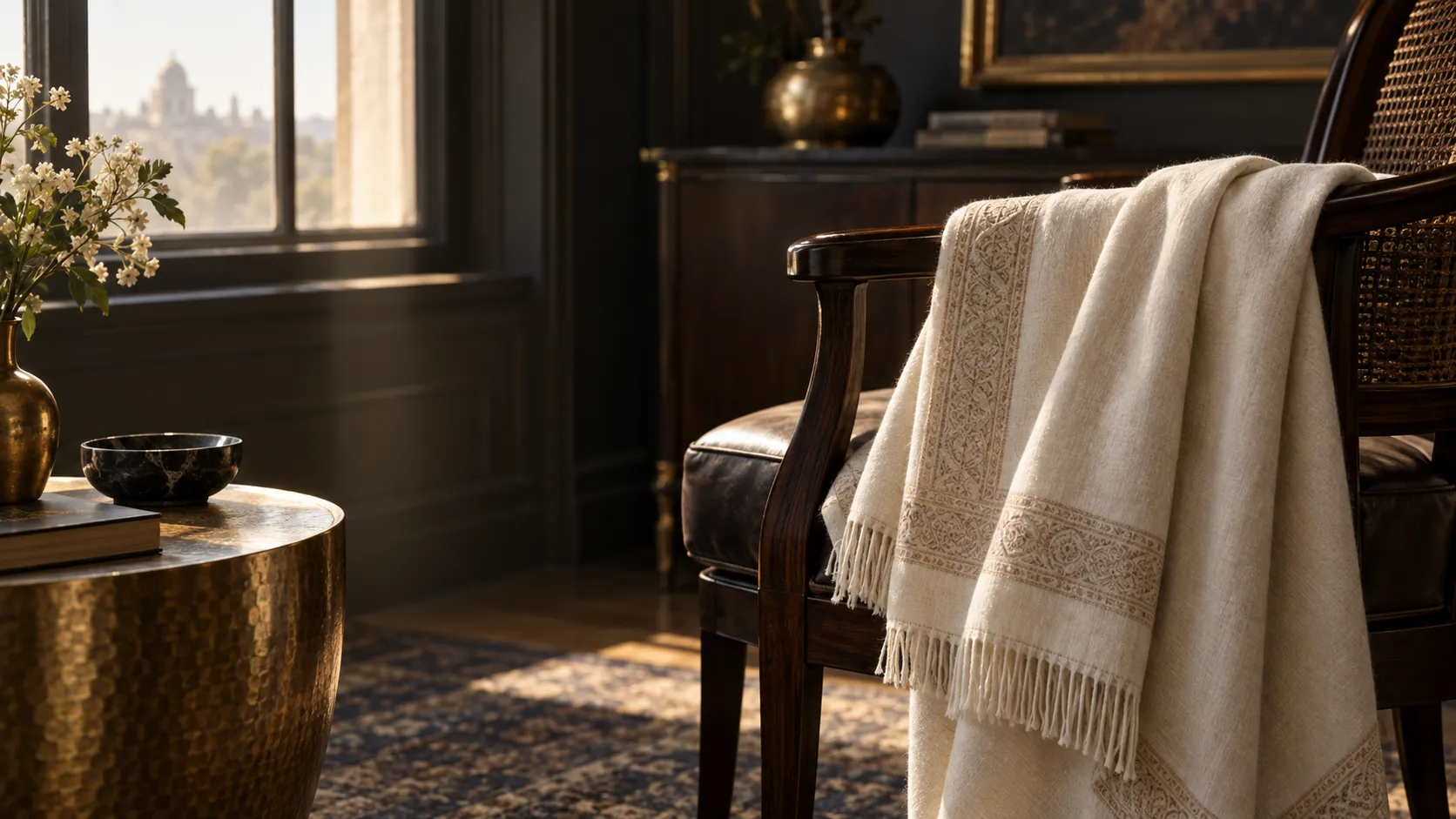
A real pashmina is one of the few things people keep for thirty years. It is handed down, gifted at weddings and pulled out every winter without a thought, which is exactly why it gets damaged. Someone washes it like a sweater, someone else wrings it out, and one afternoon the shawl that felt like air comes out stiff and a size smaller.
If you have been searching for how to wash a pashmina shawl without ruining it, the short answer is this: gently, in cool water, with the right soap, and far less often than you think. This guide explains how to do it at home, when to hand it to a professional instead, and how to store it between seasons so the fibre stays soft and the moths stay away.
What Makes Pashmina Different
Pashmina comes from the fine undercoat of the Changthangi goat of Ladakh. The fibre is thinner than a human hair and far finer than ordinary sheep wool. That fineness is what gives the shawl its warmth and its drape, and it is also what makes it fragile.
Three things damage it faster than anything else. Heat makes the fibre shrink and felt. Friction roughens the surface and creates the small balls we call pilling. Harsh soap strips the natural oils, and the shawl turns dry and scratchy. Every rule in this guide comes back to avoiding one of those three.
It also helps to know what you own. A shawl labelled pashmina may be pure, a silk blend, or a wool blend sold under the same name. A blend is usually a little tougher, but the safe method below suits all of them, so when in doubt, treat the shawl as pure.
How Often Should You Wash It
Less often than you expect. A shawl that sits on the shoulders for an evening does not get dirty the way a shirt does. Most of the time it only needs to be aired.
Hang it on a padded hanger or lay it flat in a shaded, breezy room for a few hours after wearing. Fresh air removes perfume, food smells and the faint smell of a crowded room. For a shawl worn regularly through winter, one proper wash at the end of the season is usually enough. Wash earlier only when you can see a mark, or when it carries a smell that airing does not clear.
How to Wash a Pashmina Shawl at Home
Hand washing is safe if you are patient. Set aside twenty minutes and do not rush any step.
What You Need
- A clean basin or a bucket, large enough for the shawl to float
- Cool or lukewarm water, never hot
- A mild liquid wash made for wool, silk or delicates, with no bleach or brightener
- Two thick, clean towels in a light colour
The Steps
- Check for colour run. Dab a damp white cloth on a hidden corner. If colour comes off, stop and go to a professional.
- Fill the basin. Use cool water and add a small amount of wash, about a teaspoon. Stir with your hand until the water feels slightly soft, with no thick foam.
- Soak, do not scrub. Lower the shawl in and press it under so it is fully wet. Leave it for ten to fifteen minutes. Move it gently through the water now and then.
- Squeeze, never wring. Lift the shawl and press the water out softly with both palms. Twisting is what breaks the fibre, so keep it flat in your hands.
- Rinse twice. Change to clean cool water and press the shawl through it until no soap remains. Do this a second time if the water still looks cloudy.
- Remove the water in a towel. Lay the shawl flat on a dry towel and roll it up like a sleeping mat. Press along the roll. Open it and repeat with the second towel if the shawl is still very wet.
- Dry flat in the shade. Spread it on a clean, dry towel or a drying rack, away from direct sun and heaters. Smooth the edges with your hands and turn it over after a few hours. It usually dries in a day.
Never use a washing machine, even on a gentle cycle, and never use a dryer. A machine does in five minutes what a year of wear would not.
Common Mistakes That Ruin Shawls
Most damaged shawls were damaged by good intentions. These are the mistakes we see again and again.
- Hot water. Heat shrinks the fibre, and the shawl does not return to its size.
- Ordinary detergent. It is made to remove oil, and pashmina needs its oil. Use only a wash for wool or silk.
- Fabric softener. It coats the fibre and makes the shawl look soft for a week and flat afterwards.
- Hanging it wet. The weight of the water stretches the shawl out of shape. Always dry it flat.
- Direct sun or a heater. It dries the fibre unevenly and can fade the colour.
- Rubbing a stain. Rubbing pushes the mark deeper and roughens the surface. Dab, and dab lightly.

When to Send It to a Professional
Home care suits plain, lightly worn shawls. Some pieces should go to a specialist, and sending them there is not an extravagance. It is the sensible choice.
Choose professional care when the shawl has heavy embroidery, such as sozni or kani work, because the thread and the base fabric react differently to water. Choose it for deep colours, especially red and black, which may run. Choose it for old family shawls that are worn thin, for anything with a stain you cannot name, and for any shawl that is lined, fringed with silk or mixed with zari.
A good cleaner will ask what the shawl is made of, check it for colour fastness, and tell you plainly if a mark will not come out. This is the same careful approach we describe for silk sari care and storage, because delicate fabrics share one rule: the gentler the process, the longer the piece lasts. If you would like this handled by a team that works with fine textiles every day, look at Aethel Clean, our garment care house.
Removing Common Marks
Act quickly, and act gently. A fresh mark is far easier than an old one.
Tea, Coffee or Food
Lift off any solid with a spoon. Blot with a clean, dry cloth, pressing and not rubbing. Dab a little cool water and a drop of wool wash on the spot, blot again and let it air. If a mark remains the next day, do not try again at home.
Perfume and Deodorant
These often leave a stiff patch or a faint ring. Air the shawl well. If the patch stays, a full gentle wash usually clears it, since a spot treatment tends to leave a ring of its own.
Oil and Grease
Sprinkle a little cornflour on the spot, leave it for an hour to take up the oil, and brush it off with a soft brush. Anything left over belongs with a professional.
Pilling
Small balls on the surface are normal with wear. Remove them with a fine comb made for the purpose, or with small scissors, lifting each ball with your fingers and cutting it clear. Never pull. A pulled ball takes the fibre with it.
How to Store a Pashmina Between Seasons
Storage matters as much as washing. Most shawls are lost to moths and damp, not to a bad wash.
- Clean it first. Moths are drawn to skin oil, perfume and food traces. A shawl put away dirty is a shawl that gets eaten.
- Make sure it is completely dry. Even a little damp will bring mildew.
- Fold it loosely. Sharp folds weaken the fibre over the years. Refold it along different lines each season, and add a roll of acid-neutral tissue paper in the folds.
- Use a breathable wrap. A cotton or muslin cloth is ideal. Plastic traps moisture, so avoid it.
- Add natural protection. Cedar blocks, lavender sachets or dried neem leaves keep moths away without a harsh smell. Keep them from touching the fabric directly.
- Choose a cool, dry shelf. Not the bottom of a cupboard against an outside wall, and not near the bathroom.
Look at the shawls once every month or two during storage. Air them for an hour, check for small holes, and fold them again along a new line.
The Wedding Season Question
December to February is wedding season in much of India, and shawls come out for every function. A few small habits help. Wear a shawl over clothes that are not heavily sequinned, because rough embroidery catches and pulls the weave. Keep it away from jewellery with sharp edges, and fold it over a chair, not on the floor, when you eat. When you come home, air it before it goes back into the cupboard. These small habits do more for a shawl than any wash. For outfits that also need careful handling during the season, our guide to lehenga and sherwani care covers the heavier pieces.
How to Tell Real Pashmina Has Survived a Wash
After a good wash, a pure pashmina feels soft, lightly airy and a touch fuller than before. It should return to its original size and hold its colour. If it feels stiff, rough or smaller, the water was too hot or the soap was wrong. Sometimes a gentle second rinse and a light steam from a distance, never a hot iron touching the fabric, can ease it. If the shawl is still stiff, a specialist can often help more than another home attempt.
Looking after a fine shawl is a quiet habit, not a big project. Air it after each wear, wash it once a season, dry it flat and store it clean. Do that, and a good pashmina will outlast most of the clothes in your cupboard.
For fine garments that deserve more than guesswork, Elite AVS Group brings together five houses, each built around careful, private service.
Frequently Asked Questions
Can I wash a pashmina shawl in a washing machine?
No. Even a gentle cycle uses movement and spinning that rough up and shrink the fibre. A pashmina should be washed by hand in cool water, squeezed softly and dried flat. If you do not want to do it yourself, a professional who handles fine wool is the safer choice.
How often should a pashmina shawl be washed?
Rarely. Air it after every wear and wash it once at the end of winter, or sooner if it has a visible mark or a smell that airing does not remove. Washing too often wears the fibre and takes away the natural softness that makes the shawl worth owning.
Is it better to dry clean or hand wash pashmina?
Both work for plain shawls. Hand washing is gentle if you follow the steps. Dry cleaning is the better choice for embroidered, deeply coloured, lined or very old shawls, as long as the cleaner knows how to handle fine wool and asks about the fabric first.
How do I stop moths from eating my pashmina?
Store the shawl clean and fully dry, wrapped in cotton or muslin, with cedar or lavender nearby. Moths are drawn to skin oil, perfume and food, so a dirty shawl is at the most risk. Check your stored shawls every month or two and air them on a dry day.
Why did my pashmina shrink after washing?
Almost always because the water was too warm, or the shawl was wrung or rubbed. Heat and friction cause the fibre to felt, and that cannot be fully reversed. Cool water, gentle pressing and flat drying are the way to avoid it next time.
How can I tell if my shawl is real pashmina?
A real pashmina feels very soft and light, drapes easily and warms up against the skin. It is rarely perfectly smooth, since the hand-spun yarn has small natural variations. Many shawls sold as pashmina are blends with wool or silk, which is fine, but a very low price for a large shawl is usually a warning sign.